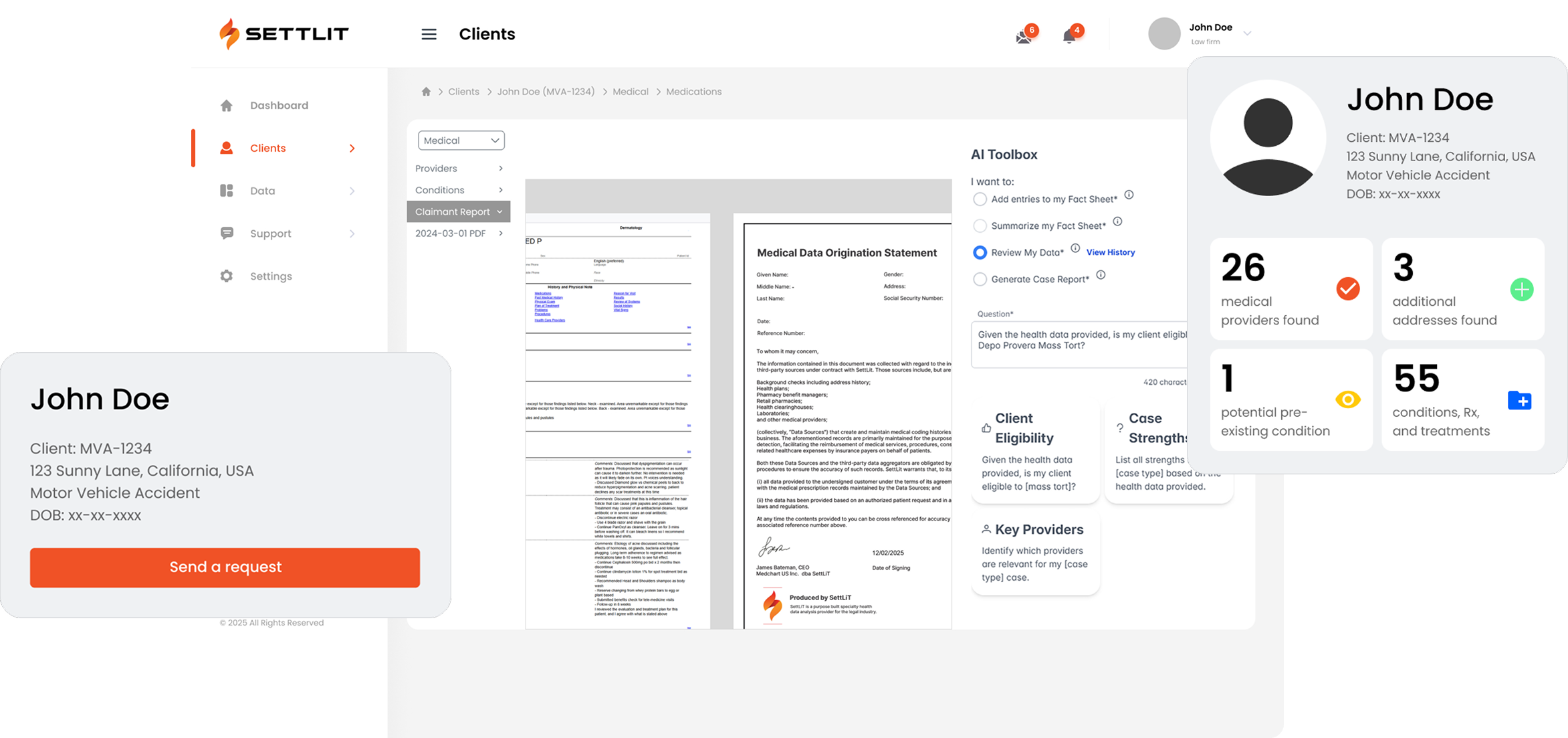
.png)
PFAS Claimants Carry the Diagnosis. You Need to Find It.
Kidney cancer. Thyroid disease. Ulcerative colitis. Find the conditions that matter and the providers who documented them.
PFAS litigation is expanding fast, and firms are managing dockets where every claimant presents differently. Thyroid disorders. Kidney disease. Certain cancers. Conditions that developed over years of exposure to per- and polyfluoroalkyl substances, treated across multiple specialists, and documented in records no one has seen yet.
The challenge isn't knowing PFAS causes harm. It's knowing which claimants have the medical history to prove it.
SettLiT connects litigation teams to structured health data before case commitment. Instead of waiting on records to understand what happened to a claimant, firms gain earlier visibility into diagnoses, provider relationships, and treatment patterns that shape intake decisions.
Qualify faster. Deploy resources on the cases that can win.
What Slows
PFAS Dockets Down
PFAS cases span a broad and variable claimant population.The conditions linked to exposure cut across specialties, the latency between exposure and diagnosis can stretch years, and claimants rarely arrive at intake with a complete picture of their medical history. The result is a qualification process that burns capital before the medical story is confirmed.

inCOMPLETE INTAKE NARRATIVES
Claimants often don't know which providers treated the conditions linked to their exposure. Thyroid care, nephrology, oncology, primary care — the history is distributed and hard to reconstruct from a conversation alone.

SLOW MEDICAL RECORD RETRIEVAL
Without knowing which facilities and specialists are relevant, firms can't even start the retrieval process. Identifying the right providers takes weeks before a single record is ordered.

CAPITAL DEPLOYED TOO EARLY
Firms invest in case workup before confirming the claimant's medical history supports the claim. Cases that don't qualify still cost resources.

LATE LITIGATION
SURPRISES
Defense uncovers diagnoses, treatment gaps, or provider relationships plaintiff counsel never knew existed. By that point, the damage to case strategy is already done.
A Better Workflow for PFAS Claim Qualification
The firms building stronger PFAS dockets aren't working harder — they're sequencing information differently. Digital health intelligence comes before case commitment, not after.
What SettLiT Helps Firms Surface in PFAS Cases
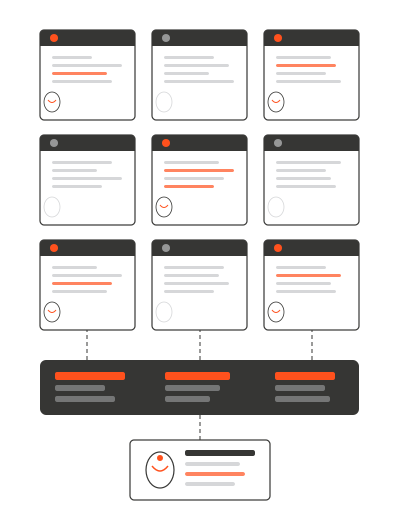
SettLiT connects to national health data networks and structured medical datasets to surface the signals that matter in PFAS litigation.
These signals include:

Qualifying diagnoses confirmed via claims data: kidney cancer, thyroid disease, testicular cancer, and ulcerative colitis

Medications and treatment indicators tied to PFAS-linked conditions

Treating providers across primary care, endocrinology, nephrology, and oncology

Lab data including PFAS biomarker concentrations (PFOA, PFOS blood levels) from national lab networks, confirming exposure before retrieval begins

Treatment timelines that help establish the medical narrative before records are pulled
Mapping Data to MDL 2873 Eligibility
PFAS personal injury claims require proof of exposure and qualifying diagnosis. SettLiT maps directly to the evidentiary requirements:

Residence in Contamination Zone
Background check returns address history to confirm residence near documented PFAS contamination sites

Qualifying Diagnosis
Claims data returns ICD-10 codes for kidney cancer, thyroid disease, testicular cancer, and ulcerative colitis

Elevated PFAS Blood Levels
Lab data surfaces PFOA and PFOS biomarker concentrations from national lab networks

Treating Provider Network
Provider discovery identifies nephrologists, oncologists, endocrinologists, and gastroenterologists across the claimant's care history
Scale Without Losing Case-Level Rigor
PFAS dockets can grow fast. But the strength of each case still depends on one claimant's diagnoses, one set of provider relationships, one medical timeline that either supports the claim or doesn't.
SettLiT turns fragmented health data into structured,searchable intelligence so litigation teams can run consistent qualification workflows at scale without sacrificing case-level rigor.
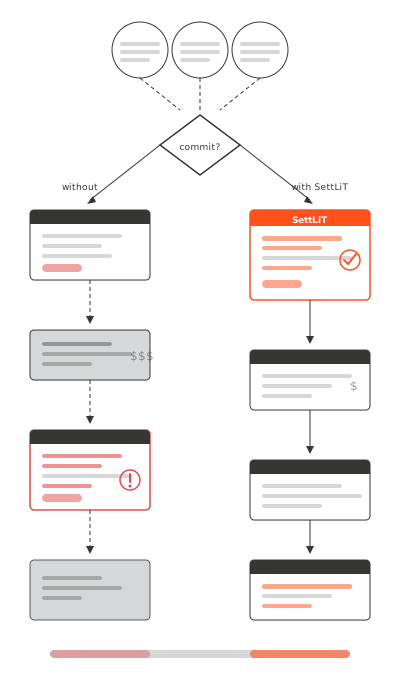
Know What You Have Before You Commit
In PFAS litigation, the gap between what a claimant reports at intake and what their medical history actually shows can be significant. Firms that begin retrieval and case workup without closing that gap first absorb administrative cost and strategic risk that compounds across a large docket.
SettLiT introduces structured health intelligence beforethat gap becomes a problem. Litigation teams build a clearer picture of each claimant's medical history earlier, which means more complete case workups sooner, less administrative burden during retrieval, and faster movement toward negotiation and resolution.
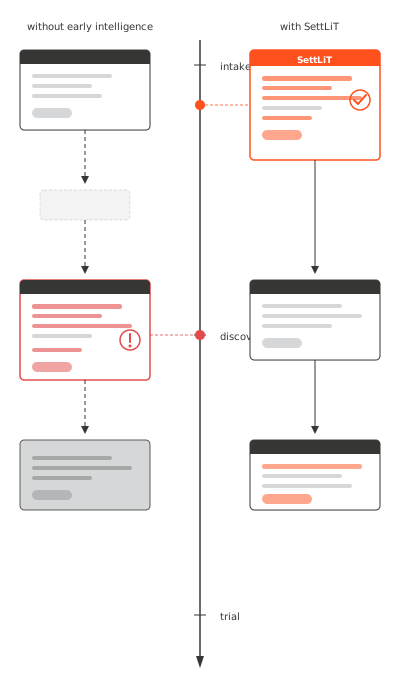
See It Before Defense Does
In PFAS litigation, the most damaging moments in discovery often involve information plaintiff counsel never had. A prior diagnosis that predates exposure. A treating provider no one knew about. A treatment pattern that opens alternative causation arguments.
SettLiT surfaces that information early. When litigation teams have visibility into the full provider network and treatment history before deposition and discovery, they can prepare strategy, anticipate credibility risks, and build settlement positioning from a place of strength rather than reaction.
Why Firms Use SettLit For PFAS Litigation
SettLiT data has been used in AFFF and PFAS litigation, supporting proof of injury in active MDL cases. As courts become familiar with digital health intelligence, the evidentiary path is becoming more standardized.

digital health intelligence First
Surface verified medical signals before committing to full record retrieval.

Provider discovery
Identify the full network of treating providers and facilities across a claimant's care history.

structured medical outputs
Receive data in clean, structured formats built for litigation workflows and team review.

Targeted retrieval enablement
Focus record requests on the providers and cases with the strongest evidentiary value.
Scalable docket workflows
Run consistent claimant qualification workflows across hundreds or thousands of cases.
Integration Ready Infrastructure
Built on Marble's standards-based health data infrastructure for reliable, secure connectivity.
.svg)
.svg)
.svg)
.svg)
.svg)
.svg)